
"How do I train my puppy to stop biting and nipping during playtime?"
What Every Pet Parent Needs to Know
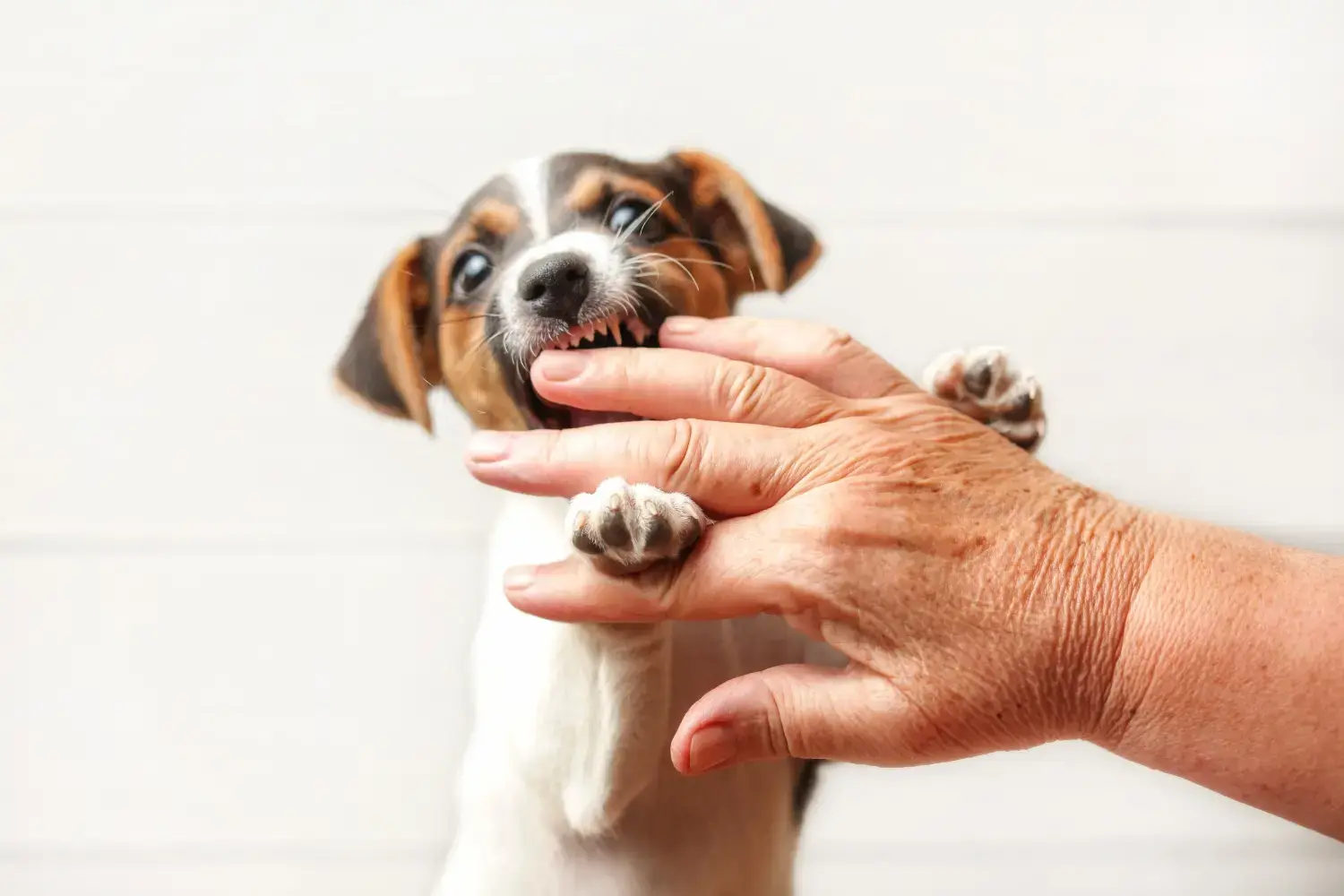
Welcoming a new puppy into your home is one of life’s great joys—but it often comes with a less-joyful surprise: puppy teeth. Suddenly your fingers, sleeves, or ankles become chew toys during playtime. If you’re asking how to train a puppy to stop biting and nipping, you’re asking the right question.
This behaviour is normal, but left unchecked it can become a habit that’s painful, unmanageable, or even dangerous as your puppy grows. The good news: with patience, consistency, and the right approach, you can guide your puppy toward gentle, safe play. This article gives you the insights and practical steps every pet parent needs—no gimmicks, no guesswork.
Why Puppies Bite and Nip During Play
Understanding why your puppy bites helps you respond wisely, rather than reacting out of frustration.
Teething & Exploration
Puppies use their mouths to explore the world. They bite, chew, nip and mouth because they have no hands and curiosity is high. During teething (around 3-6 months), the urge to chew increases as baby teeth fall out and adult teeth come in.
Play behaviour & bite inhibition
In the litter, puppies bite each other during play. When one bites too hard, the other yelps, play stops, and the lesson is learned: “That bite was too hard.” This is how they develop bite inhibition. When a puppy comes into your home early, they still need to learn this—but you become the playmate and teacher. Unless you provide consistent feedback, nipping can persist.
Over-excitement, boredom or attention-seeking
Playtime often leads to excitement spikes. A puppy may bite simply because the play (or the person) is overly exciting, or because they are bored and looking for stimulation. Sometimes nipping becomes a game: they bite, you react (yell, pull away), they think “Great — big reaction!” and the cycle continues.
Human vs dog play rules
Dogs and humans play differently. A friendly dog bite is different from human skin being a bite target. When your puppy mouths hands, clothing, ankles during play, they’re using dog-play rules—so you must teach human-play rules: Hands = gentle or no-bite, Toy = chewable.
 The Step-by-Step Guide: How to Train a Puppy to Stop Biting and Nipping
Here’s a structured, methodical approach you can apply to help your puppy learn gentle play.
1. Stay Calm, Consistent and Clear
- Use the same cue every time biting occurs—something like “Ouch!”, “No bite!”, or “Too hard!”.
- Stop play immediately when the cue is used. Your puppy should learn that biting = end of fun.
- Avoid yelling, smacking, or rough punishment. These methods can lead to fear or aggression and confuse your puppy.
- All family members must use the same rule and the same response. Inconsistent reactions (one person lets it happen, another yells) will confuse the puppy and slow learning.
2. Redirect to Appropriate Toys
- Always have safe chew toys and tug toys within reach during playtime.
- When your puppy starts biting your hands or clothes: calmly interrupt, say your cue (e.g., “No bite!”), and then immediately offer a toy: “Here — chew this!”
- Praise and reward your puppy when they bite the toy instead of your hand: “Good chew!”
- This teaches: Hands are for gentle contact or waiting. Toys are for chewing and biting.
3. End Play When Biting Happens
One of the most effective lessons puppies learn is that rough mouthing ends play.
- If your puppy bites too hard or repeatedly, say your cue, then stand up, turn away, and pause play for about 20-30 seconds.
- After the pause, restart play gently. If the biting happens again, repeat.
- Over time, your puppy learns: Biting = play stops. Gentle = play continues.
4. Reward Gentle Behaviour
- Every time your puppy plays without biting (or uses the toy instead of your hand), immediately praise them: “Good gentle!” or “Nice teeth on toy!”
- You can add a small treat or a few seconds of extra play or affection. The key: reinforce what you want, not just punish what you don’t.
- Positive reinforcement helps your puppy learn the desired behaviour faster and with better long-term results.
5. Manage Over-excitement, Fatigue & Boredom
- Puppies have bursts of energy but also need lots of sleep (sometimes up to ~16-18 hours a day including naps). A tired puppy is more likely to mouth or nip.
- Provide structured play sessions followed by rest/nap.
- Offer mental stimulation (e.g., puzzle feeders, new toys) so the puppy isn’t only chewing because they’re bored.
- Watch for signs of overstimulation (excessive zoomies, barking, difficulty settling). When you see them, pause play and allow calm-down time.
6. Teach Specific Commands & Alternatives
- Teach your puppy “Leave it”, “Drop”, or “Gentle”. These give your dog clear alternatives rather than vague “Don’t bite” instructions.
- For example: when your puppy’s mouth heads toward your hand, cue “Leave it”, then offer toy, then reward.
- During calm moments (not just when biting occurs), practice gentle handling of their mouth and paws—so they learn “hands touching = okay” rather than “hands = chew” instinctively.
7. Provide Socialisation & Controlled Play with Other Dogs
- Safely introduce your puppy to well-mannered, vaccinated adult dogs or calm puppies. This allows the puppy to learn social cues and bite inhibition naturally.
- In supervised puppy playgroups, the puppy can experience peer feedback (“That bite was too hard”) which reinforces your human-led lessons.
- This social layer supports your direct training and helps your puppy generalise gentle behaviour across contexts.
Common Situations and Solutions
Scenario: My puppy bites my hands/fingers during play
- Immediately say the cue (e.g., “Ouch!”).
- With no sudden jerks, withdraw hand slowly but calmly.
- Offer the chew toy.
- Resume play, but only if the puppy engages with toy or behaves gently.
- Repeat consistently. Over days you’ll see less hand-targeting.
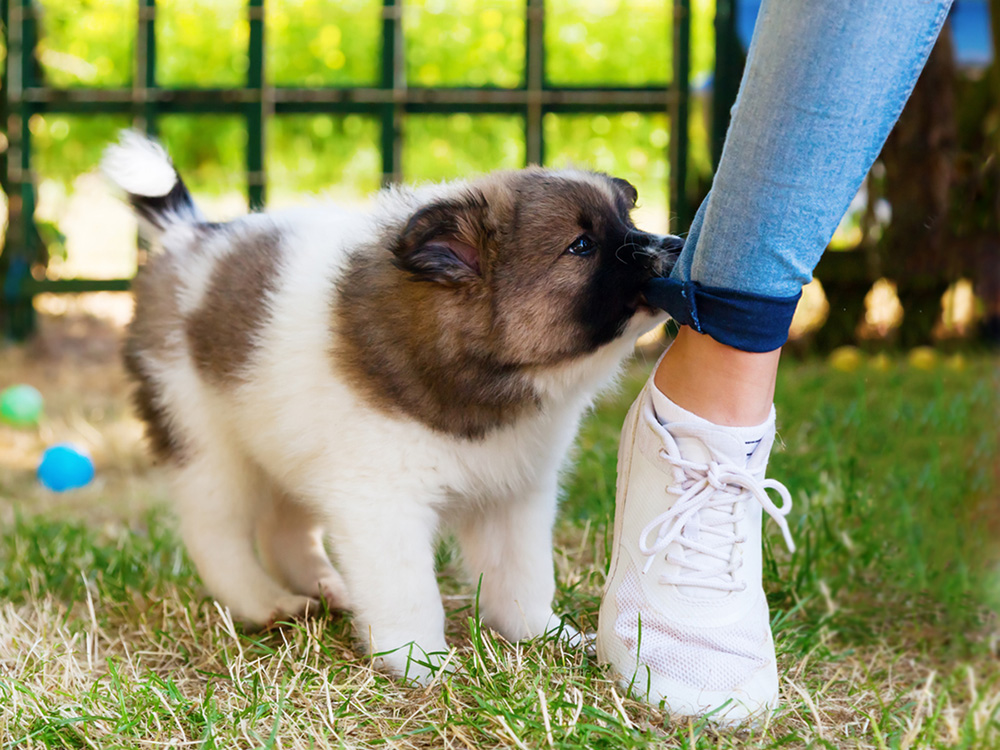
Scenario: My puppy nips at feet or ankles
- Feet and ankles often trigger a chasing/herding instinct.
- Avoid running around in socks or pants that dangle.
- Use toys or treat dispensers to redirect movement. If feet are targeted, freeze your movements and say the cue, look away for a moment, then resume movement and play when the puppy is calm.
- Teach “Leave it” and reward when they ignore your feet.
Scenario: Play gets wild, biting escalates
- Monitor the session and stop before excessive biting if you sense it’s going too far (zoomies, rough body language).
- Use a calm toy-based game instead of hands-on wrestling.
- After a high-energy session, ensure a calm down period or nap, as overtired puppies are more prone to uncontrolled biting.
Scenario: The biting seems aggressive (snapping, growling)
- If you notice signs of fear, pressure, or aggression—growling, head down, ears back, sustained biting—this is beyond normal mouthing.
- Stop the rough play immediately and consult a certified positive-reinforcement trainer or veterinary behaviourist.
- Early intervention is important to prevent escalation.
Teething Trouble: When Biting Gets Worse
What’s happening
- Around 3-6 months, puppies lose baby teeth and gain adult ones. This period often comes with increased chewing, biting, drooling, and occasional bleeding gums.
- Because it’s slightly uncomfortable, your puppy may chew anything in sight—including your hands, clothes, or other soft targets.
What you can do
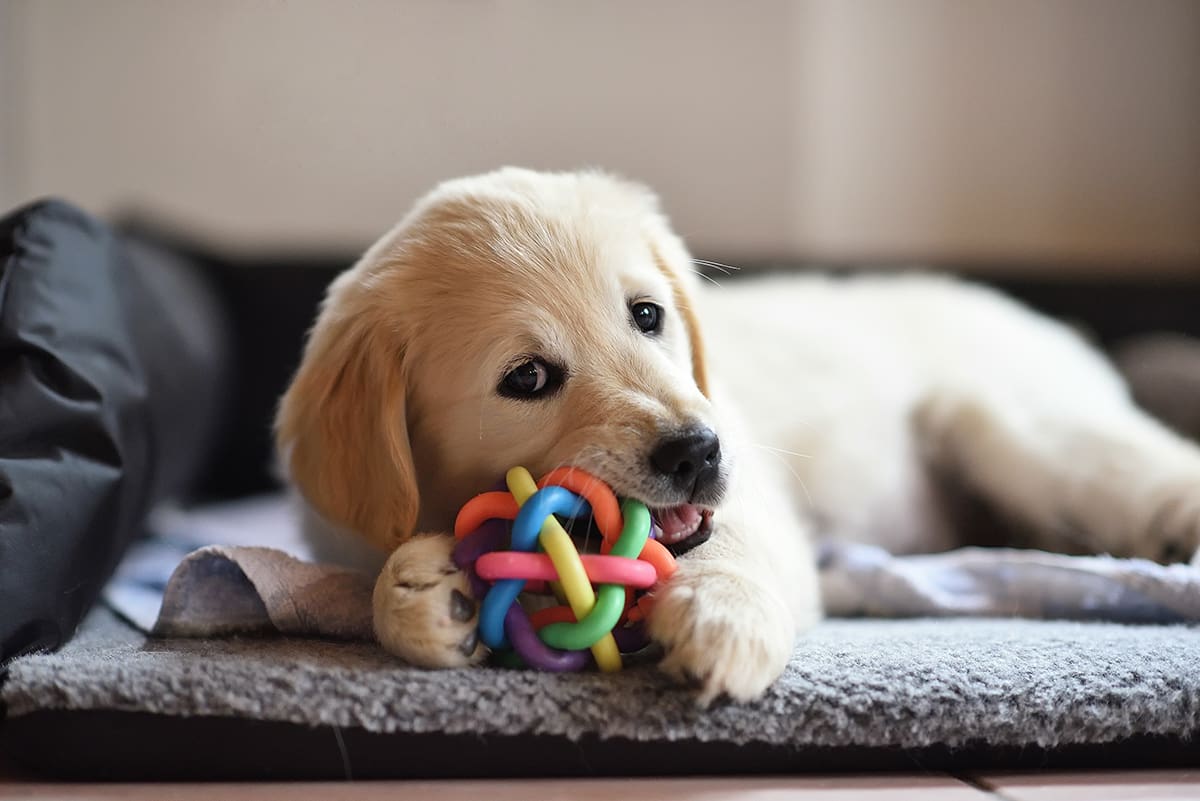
- Provide plenty of chew toys suitable for teething: rubber rings, rope toys, frozen cloths (safe and supervised), soft but durable chew bones.
- Keep your hands away from chew-targets: encourage toy use instead.
- Offer increased chew breaks during the teething phase to reduce frustration biting.
- Avoid punishing the biting—focus on redirecting and giving appropriate outlets.
Long-term effect
- Once adult teeth are in and the discomfort decreases, biting often reduces—but only if proper training has been in place. “Letting it pass” without training means your puppy may simply graduate to bigger teeth and harder bites.
Setting Up the Right Environment for Success
Create a “Chew Zone”
- Designate an area with tempting chew toys, safe space for naps, and no tempting human limbs or loose clothing.
- Rotate toys so the puppy doesn’t get bored.
Establish a Play-Pause-Rest Routine
- Short structured play sessions (5-10 minutes), followed by calm down and rest.
- This mimics natural puppy rhythms and helps regulate energy and biting impulses.
Prevent Unsupervised Rough Play
- When you can’t fully watch your puppy, put them in a safe crate or gated area with chew toys.
- Your goal: reduce unsupervised mouthing which may reinforce biting habits.
Household Consistency
- Everyone in the household must follow the same biting-rules.
- Kids, guests, and family must be aware: hands = gentle, toy = chew.
- Mixed messages confuse the puppy and prolong the problem.
How Long Until Biting Reduces?
- With consistent training, many puppies show measurable improvement within 2–4 weeks of focused effort.
- However, fully reliable “gentle mouth” behaviour may take several months, especially in larger breeds or high-energy pups.
- Factors influencing progress: puppy age, breed, individual temperament, consistency of training, amount of mental/physical stimulation.
- Don’t expect perfection overnight—but expect progress. Celebrate smaller wins (less frequent bites, softer bites, faster redirection) toward longer-term success.
Troubleshooting Table: Quick Guide
| Problem | Probable cause | Solution |
|---|---|---|
| Puppy bites worse when tired | Fatigue + overexcitement | Pause play earlier, enforce rest |
| Puppy bites feet/ankles | Instinctual chasing/herding | Redirect with toy, teach “leave it” |
| Puppy ignores cue | Inconsistent or delayed response | Ensure everyone uses same cue and cue precedes stop of play |
| Puppy bites during quiet time | Chewing/teething discomfort | Provide frozen chew toys, independent chew time |
| Puppy nips despite training | Mixed messages or lack of socialisation | Review rules for all family, increase social play with vaccinated dogs |
Long-Term Habits for a Well-Mannered Dog
Avoid encouraging hand-biting games
- It may seem cute when they’re small, but letting your puppy bite fingers or play rough sends the wrong message. As they grow, those “cute nips” become painful or even dangerous.
Keep reinforcing gentle play
- Even after the biting phase diminishes, you’ll still reinforce good behaviour with praise when play remains gentle. This keeps the habit strong.
Provide ongoing mental and physical stimulation
- A satisfied dog is a calmer dog. Training, enrichment toys, fetch/tug sessions, socialisation—these all redirect energy out of mouthing and into positive outlets.
Teach calm behaviour around excitement
- Teach your puppy that joy and excitement don’t equal mouthing. Use calm handling, gentle petting, and controlled play to instil self-control.
Stay vigilant
- Adult teeth are bigger. A minor bite from a 10-week pup may not hurt much; a minor bite from a 40 kg adult dog can hurt significantly. Early control avoids big problems later.
When to Seek Professional Help
If you observe any of the following, it’s time to reach out for expert help:
- Persistent aggressive behaviours: growling, snarling, attacks during play or interaction.
- Biting that draws blood, or that becomes non-playful.
- Fear or anxiety-based biting (rigid body, frozen posture, avoidance).
- Lack of improvement after consistent training effort (months) in a high-stimulus environment.
Look for a trainer or behaviourist who uses positive reinforcement, reward-based methods, and avoids dominance-based or punitive techniques. Early professional input can save months of struggles and set your puppy on the right path.
Final Thoughts
Learning how to train a puppy to stop biting and nipping isn’t about eliminating every mouth move—it’s about guiding your puppy into understanding what is acceptable and what isn’t, and building that foundation of good play, trust, and self-control.
By combining calm, consistent cues, redirection to appropriate chew objects, manageable play/rest routines, positive reinforcement, socialisation, and patience, you’ll guide your puppy through this natural but sometimes frustrating phase.
In doing so, you’re not just stopping unwanted behaviour—you’re setting up a lifelong pattern of healthy communication, respectful play, and solid bonding between you and your dog.
The biting phase doesn’t have to define this time. With the right approach, it becomes a stepping-stone to a well-behaved, confident canine companion.
Enjoy the journey—with fewer nips, more tails wagging, and play that’s fun for both of you.